Postpartum Hair Changes: What to Expect as It Grows Back
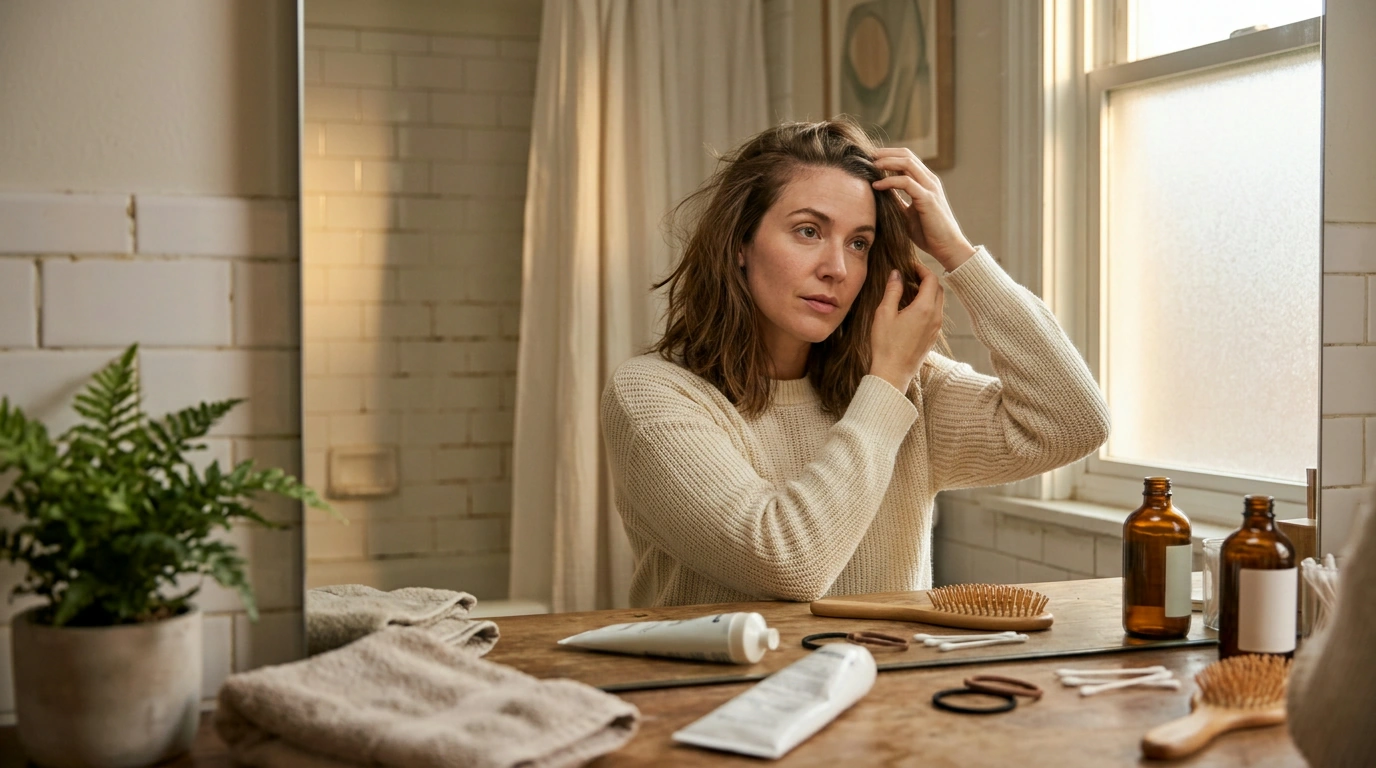
Does postpartum change your hair?
Yes. After giving birth, many people notice more hair shedding, a change in texture, or hair that seems thinner than usual. The most common change is temporary shedding called postpartum hair loss. It can feel dramatic, but it usually reflects a shift in the hair-growth cycle rather than permanent hair loss.
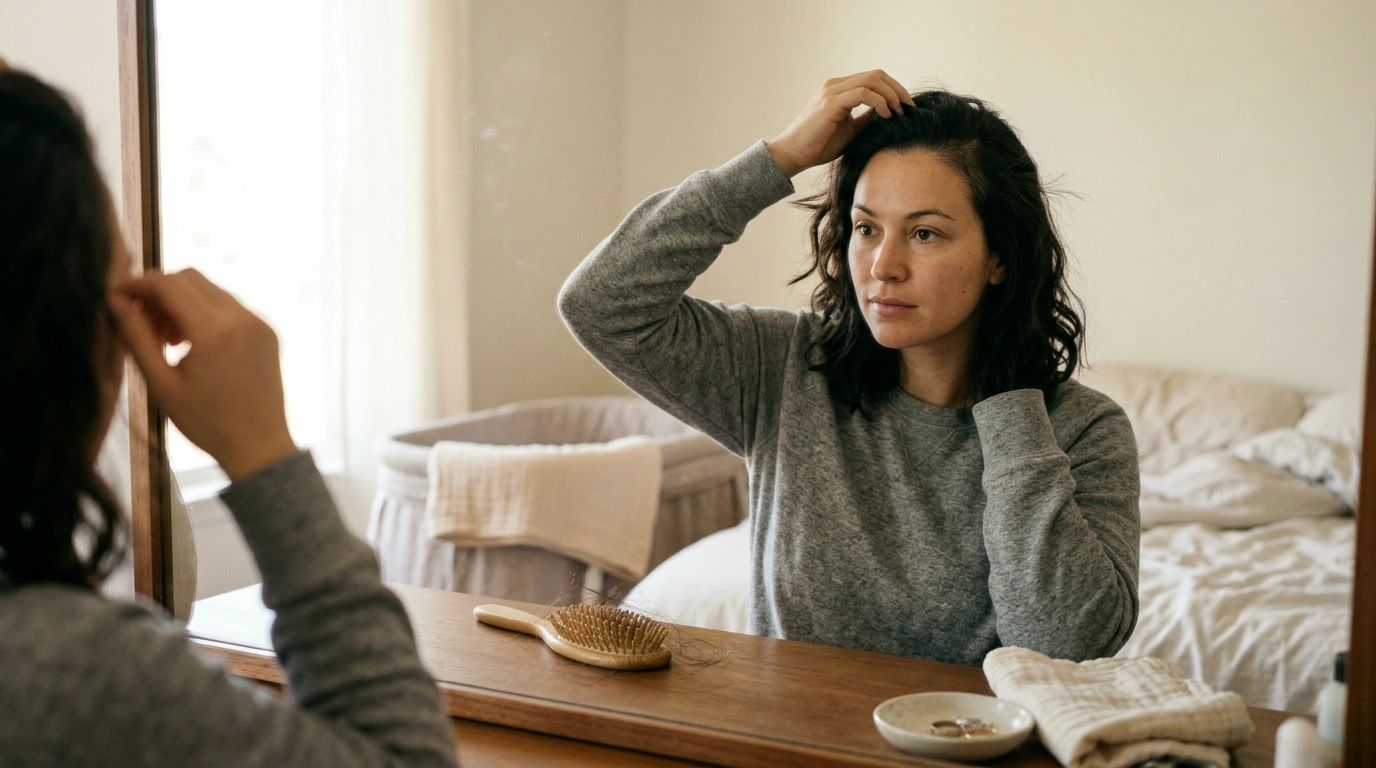
During pregnancy, higher hormone levels can keep more hairs in the growth phase, so fewer fall out day to day. After delivery, hormone levels change and those hairs may shed within a similar period. You may notice extra strands in the shower, on your brush, or around your hairline.
When does postpartum hair shedding start and stop?
Shedding often becomes noticeable a few months after birth, rather than right away. It commonly peaks around four months postpartum and gradually improves over the months that follow. For many people, hair fullness moves toward its usual level by their baby’s first birthday, though timing varies.
New growth may appear as short flyaways along the hairline. Hair can also feel different in texture or seem less full while it grows back. Breastfeeding does not prevent postpartum shedding, and the timing can vary whether or not you breastfeed.
What can help while your hair recovers?
Gentle care can make shedding easier to manage, even though it cannot stop the normal cycle. Try loose hairstyles, avoid frequent high heat or tight styles, and use a wide-tooth comb when detangling wet hair. Eating a balanced diet with enough protein and nutrients supports general health; avoid starting supplements without checking with a healthcare professional.
For a fuller overview of what’s typical and when to seek advice, read the guide to postpartum hair changes.
When should you ask a healthcare professional?
Check in with a healthcare professional if shedding is severe, occurs in distinct patches, continues without improvement beyond about a year, or comes with scalp irritation or other symptoms. They can look for causes such as iron deficiency or thyroid changes, which may need evaluation and treatment. Seek personalized advice sooner if the change worries you.
FAQ
How long does postpartum hair shedding usually last?
Shedding often eases over several months, with many people seeing their hair fullness move toward normal by around one year postpartum. The timeline varies, so ask a healthcare professional if it is not improving or you have other symptoms.











Leave a comment