Postpartum Hair Changes: What’s Normal & When to Check
Postpartum Hair Changes With Perspective: What’s Normal, What Helps, and When to Get Checked
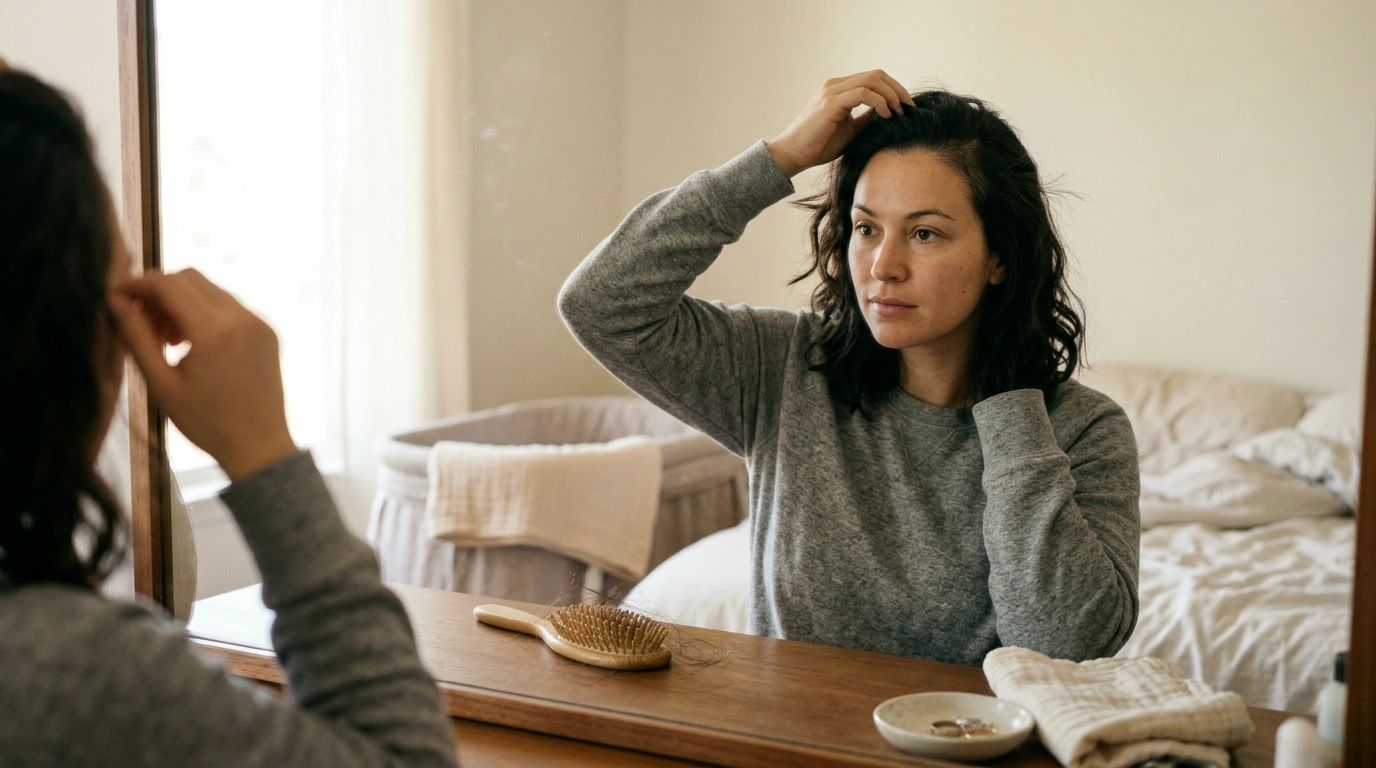
Hair can look and feel noticeably different after pregnancy—more shedding, new texture, dryness, or flyaways around the hairline. These shifts are usually temporary and tied to hormone changes, stress, sleep disruption, and nutrition demands. A calmer approach starts with knowing what’s common, what supports regrowth, and which signs deserve a medical check.
Why hair often changes after pregnancy
Many postpartum hair concerns trace back to a few overlapping factors that can happen all at once—right when routines are least predictable.
- Hormone shifts after delivery: During pregnancy, higher estrogen levels often keep more hairs in the “growing” phase. After delivery, that signal drops, and more follicles can enter the shedding phase together, making hair fall suddenly feel dramatic.
- Physical stressors: Blood loss, C-section recovery, illness, breastfeeding demands, and prolonged sleep disruption can all nudge the body toward shedding or slower regrowth.
- Nutrition demands and depletion: If intake is inconsistent (common postpartum), low protein and iron in particular can worsen shedding and fragility.
- Scalp shifts: Dryness, oiliness, itch, or flaking can change how “full” hair looks even if your follicle density hasn’t truly changed.
For an overview of typical postpartum shedding patterns, the American Academy of Dermatology Association offers a helpful, reassuring baseline on what’s common after pregnancy.
A realistic timeline: what you may notice month by month
Postpartum hair changes are often more about timing than “something going wrong.” Many people feel blindsided simply because the peak happens months after birth.
| Time after birth | What may be normal | Helpful focus |
|---|---|---|
| 0–2 months | Subtle shedding or none; scalp dryness/itch | Gentle cleansing, avoid tight styles, prioritize sleep when possible |
| 3–4 months | Noticeable shedding; more hair in shower/brush | Detangling care, reduce heat/chemical stress, consistent nutrition |
| 5–6 months | Shedding may continue but often starts easing | Scalp health, minimize breakage, consider a trim for ends |
| 7–12 months | Regrowth along hairline; improving fullness | Patience, protective styling, check labs if symptoms persist |
- Early postpartum (first 6–12 weeks): Hair may still feel “full,” even if the scalp feels more sensitive or dry.
- Common peak shedding (often months 3–4): You may notice more strands releasing during washing, brushing, or even on clothing.
- Months 6–9: Shedding typically slows. New growth may show up as short “baby hairs,” especially around the temples and hairline.
- By 12 months: Many return close to baseline density, though texture changes (curl pattern, coarseness) can linger.
- Beyond a year: If shedding is intense, patchy, or not improving, it’s reasonable to get checked.
Broader postpartum recovery changes (sleep, stress, physical healing) can also influence how your hair behaves; the Mayo Clinic’s postpartum care overview is a useful reference point.
Shedding vs. breakage: how to tell the difference
It’s easy to label everything as “hair loss,” but the fix depends on what’s actually happening.
- Shedding: You’ll see full-length strands, often with a tiny white bulb at one end. The thinning usually feels diffuse, not in a single spot.
- Breakage: You’ll find shorter pieces without a bulb. Breakage is more likely with dryness, bleach/relaxers, frequent heat styling, or aggressive brushing.
- Simple check: Look at what collects in your brush or shower drain. Mostly long, similar-length strands suggests shedding; lots of short fragments points to breakage.
- Both can happen: Reducing breakage can make hair look fuller while shedding resolves on its own timeline.
Daily habits that support fuller-looking hair while it recovers
When postpartum life is already demanding, “small and repeatable” tends to work better than a total routine overhaul.
- Be gentle when wet: Use a wide-tooth comb, detangle from ends upward, and skip rough towel-drying (squeezing is kinder than rubbing).
- Limit tension: Rotate hairstyles, avoid tight ponytails, and be cautious with heavy extensions. Repeating the same tight style in the same spot can worsen traction-related thinning.
- Reduce high heat and harsh chemicals: Lower temperatures, fewer passes, and heat protectant can help. If hair feels fragile, consider delaying major bleaching/relaxing.
- Keep scalp care simple and consistent: Flaking and itch can be addressed with appropriate shampooing. A calmer scalp supports healthier growth cycles.
- Use styling strategies that “cheat” fullness: A soft layered cut, a slight side part shift, or gentle clips/scrunchies can make regrowth stages look more even.
Nutrition and health checks that can make a difference
If you’re unsure what to bring up at appointments, having a plan for postpartum follow-ups can reduce the mental load. Prepare for Your Postpartum Checkups can help you organize symptoms, questions, and timelines so concerns like hair shedding, fatigue, and mood changes don’t get overlooked. For more postpartum guidance, ACOG’s patient FAQs are also a strong, evidence-based resource.
Keeping perspective: stress, self-image, and what helps emotionally
If stress feels “always on,” Break the Tension: Stress Relief Techniques – Breathing Exercises, Quick Meditations, Grounding Techniques, and Time Management Tips to Reduce Stress offers practical, low-effort tools that fit real postpartum days.
A practical read: Postpartum Hair Changes With Perspective
If you want a focused, calming guide you can revisit during the shedding peak and regrowth stage, Postpartum Hair Changes With Perspective lays out common patterns, what tends to help, and when it’s smart to loop in a clinician. It’s designed to support realistic expectations—so hair changes don’t become one more thing to “solve” during recovery.
FAQ
Does postpartum change your hair?
Yes—many people notice increased shedding, dryness, texture shifts, or short flyaways after delivery due to hormone changes and postpartum stressors. For most, shedding peaks around months 3–4 and gradually improves over 6–12 months.












Leave a comment